
Evidence at a glance
From Answering Questions to Taking Over a Workstream
OpenAI has introduced Dots as continuously running agents for complex projects and everyday tasks, powered by GPT-6 Astra. Each Dot has its own cloud computer and browser, can use applications the user authorizes, and remains accessible through ChatGPT, Slack, or Teams. The product is aimed not at a single conversation, but at work that requires ongoing follow-up, cross-tool actions, and the ability to resume when new information arrives.
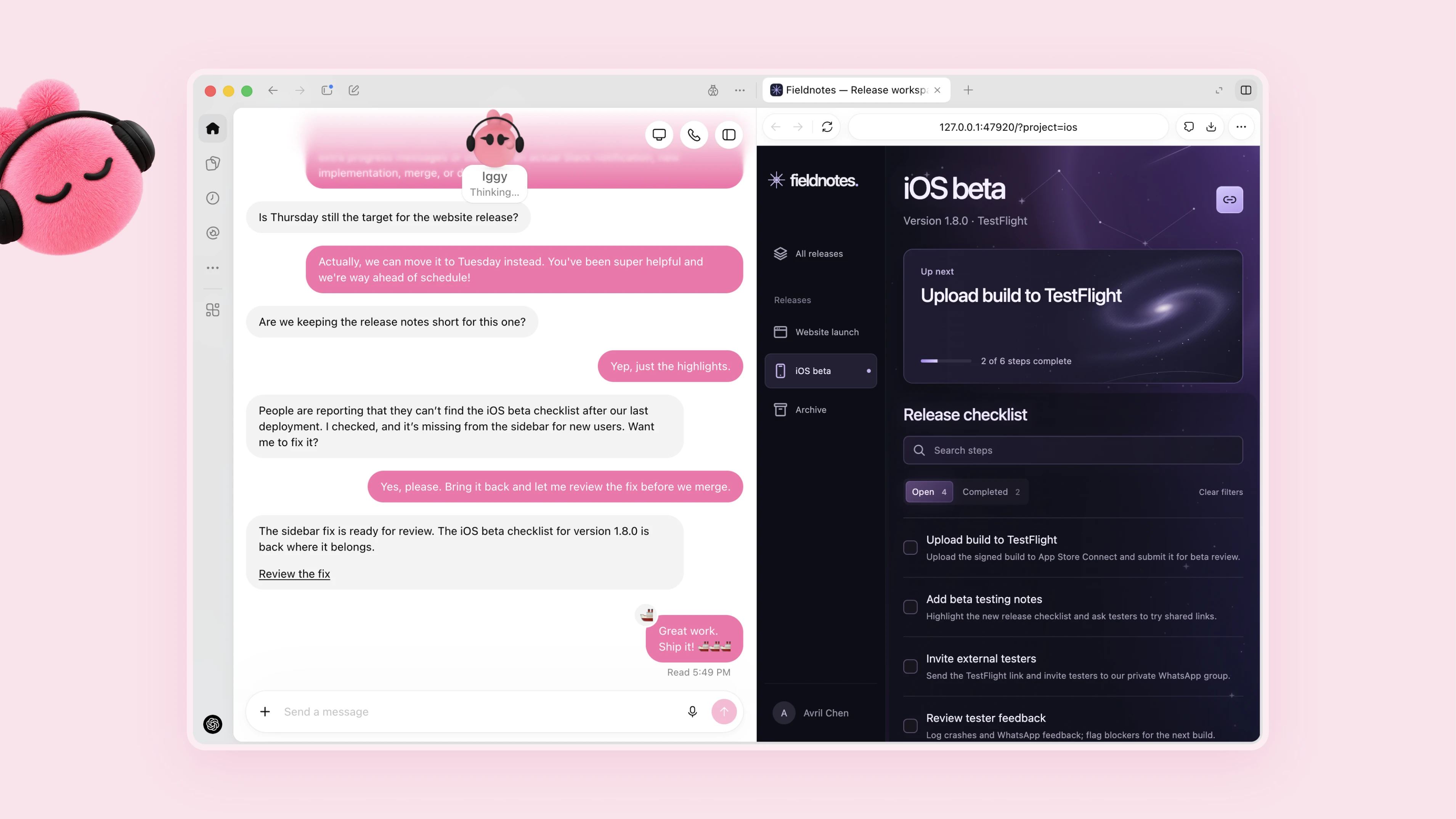
The important shift is that the promise moves from “help with one step” to “keep working toward a goal.” In one early test, a Dot noticed that its user had forgotten to invoice a publication, prepared the invoice, and sent it after receiving approval. That does not mean an agent can take over financial operations without supervision. It shows a different division of labor: the human sets the objective and approves consequential results, while the agent finds omissions, prepares materials, and advances the process.
The Core Mechanism Is an Execution Environment
Dots combines several layers rather than relying on memory alone. The model interprets goals and breaks down tasks, the dedicated cloud computer and browser provide an execution space, connected applications provide external tools, and feedback helps the agent learn a user’s preferences, reasoning style, and quality bar. Users do not need to create a separate thread for every project. A Dot can move several tasks forward in parallel while accepting new work.
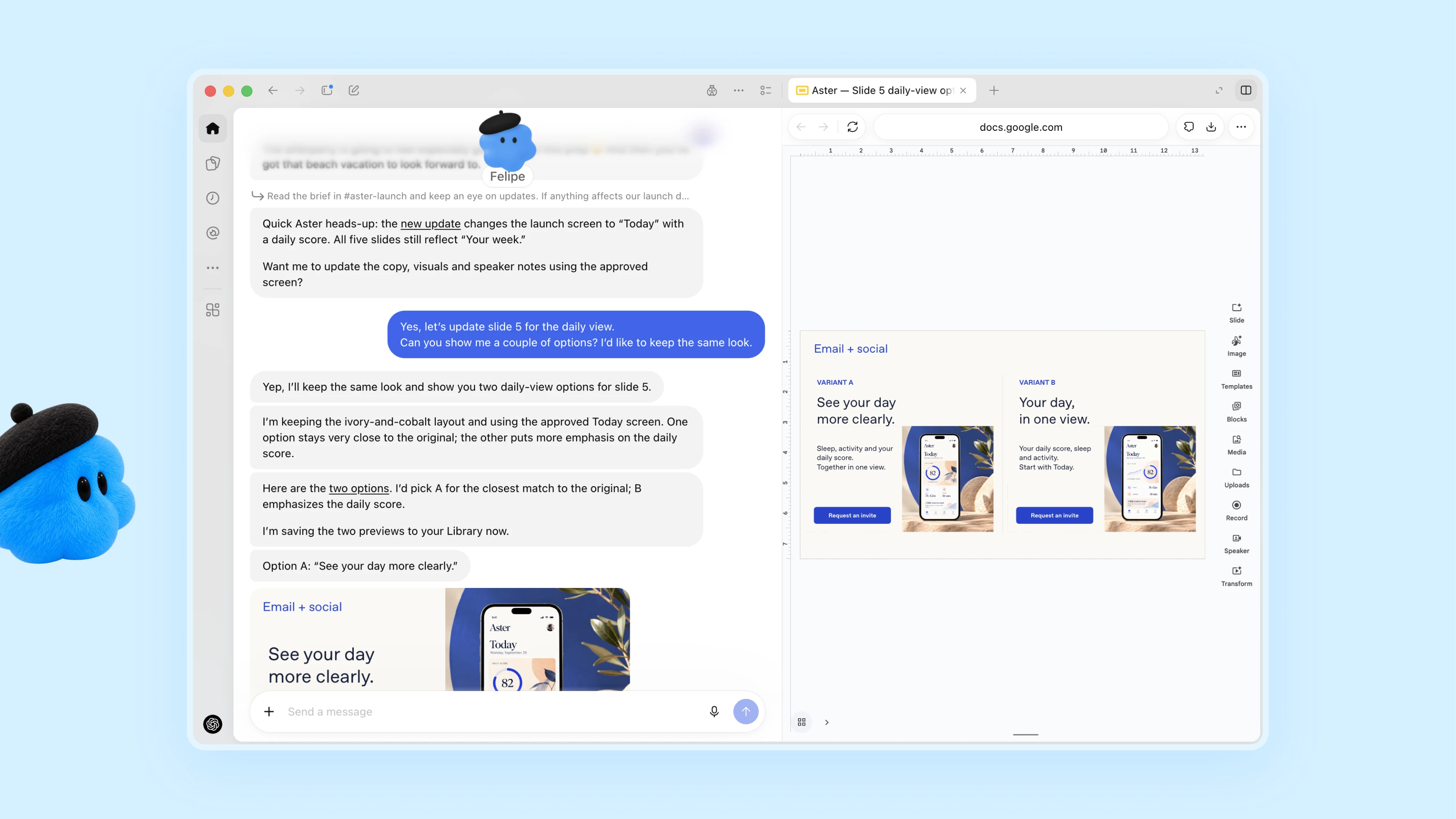
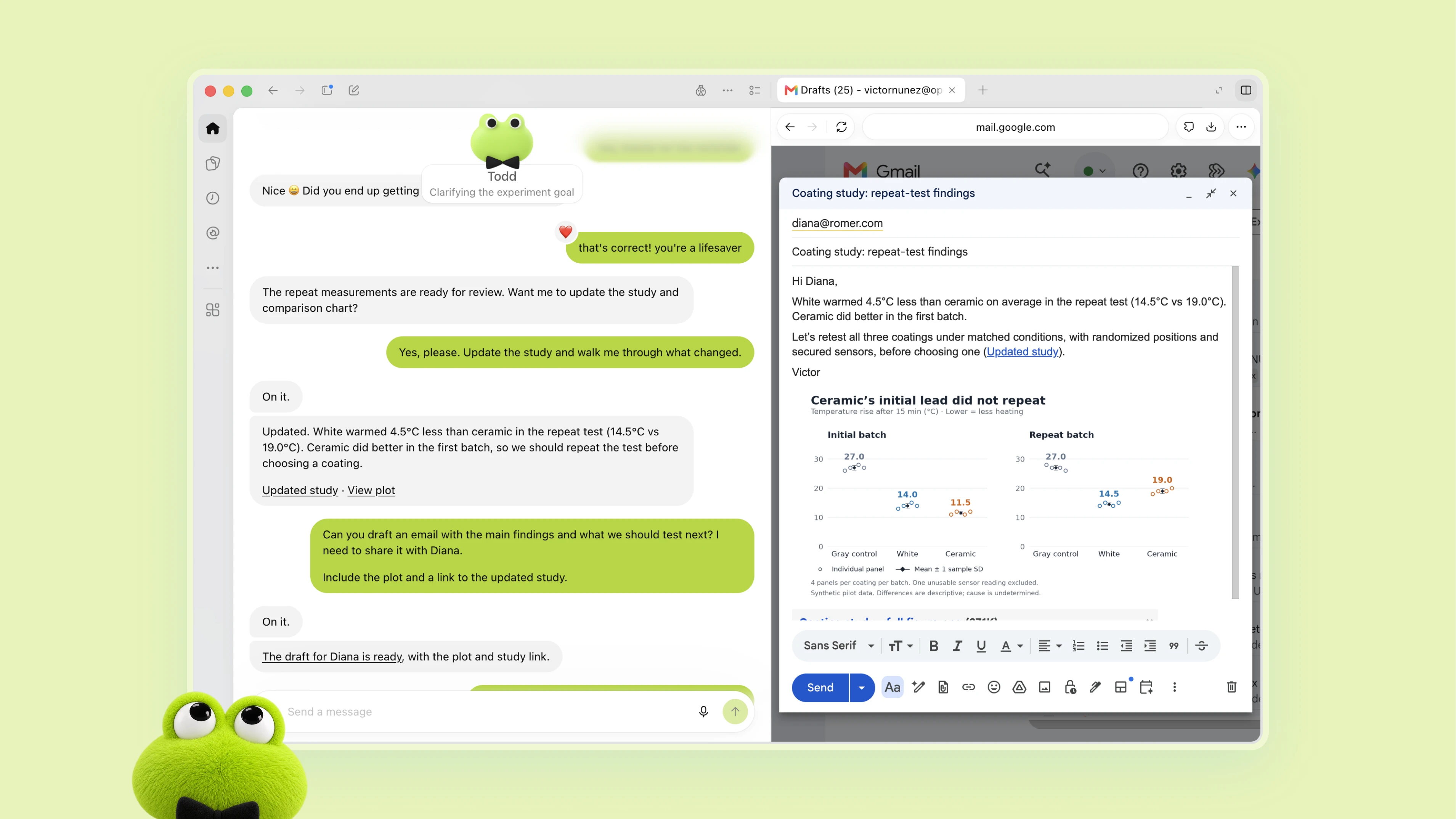
This makes persistent context more than a longer chat history. A developer can ask a Dot to monitor customer feedback, identify recurring requests, scope small improvements and bug fixes, build and test them, and return complete pull requests with videos for review. A product lead can have it revise launch materials when positioning or scope changes. In research, it can rerun analyses as new data arrives, investigate unexpected results, update figures, and flag explanations that require the scientist’s judgment.
Four Thousand Integrations Are Not the Main Story
Dots can connect to more than 4,000 applications. With permission, it can also connect to other devices, including the user’s laptop, and the user can open the Dot’s cloud computer at any time to inspect its work. The evidence points to a product that is not an isolated model, but an agent placed inside a real software environment: it can browse, read, organize, modify, and return work for human review.
The number of integrations, however, is not what determines enterprise readiness. More connections also mean more identities, data sources, and operational privileges attached to a continuously running agent. The material says actions can be allowed, routed for approval, or blocked by rules. Background research uses constrained read-only tools, while sensitive actions such as changing a password remain with the user. The design is therefore not “give the agent a universal key,” but “classify actions and assign each one an appropriate approval threshold.”
24/7 Operation Does Not Mean No Supervision
The easiest way to misread Dots is to treat “working 24/7” as fully autonomous operation. The material presents a more limited picture: an agent can continuously investigate, analyze, write, and prepare results, while pull requests, invoices, external messages, and other consequential actions still require review. It can remove repetitive execution from senior staff, but it does not remove the person accountable for quality, risk, and external commitments.
That is also why learning a user’s standards is both useful and risky. Personalization reduces repeated instructions and can make results fit the user’s way of working. But persistent context, a cloud computer, laptop access, and business-system permissions expand the risk of unauthorized actions, data exposure, and accumulated mistakes. For a technical leader, a Dot should be treated as a stateful execution principal rather than a smarter input box. It needs identity, permissions, logs, and rollback boundaries, not just a better model score.
The Enterprise Path Starts with Narrow Responsibilities
OpenAI is rolling Dots out through Pro, Business Premium, and Enterprise plans, while previewing specialist agents with their own identities, access management, IT-provisioned hardware, and deeper integrations with systems of record. That direction is more compatible with organizational governance than a single agent that can do everything. A specialist agent can be tied to a defined responsibility, a limited set of systems, and an explicit approval process. The vision of multiple Dots working together will depend on this separation of duties.
The sensible adoption path is therefore not to connect every business system and see what the agent does. Start with work that is continuous, repetitive, auditable, and easy for a human to take back when it fails. Feedback monitoring, rerunning analyses, updating documents, and preparing small code fixes are better starting points than granting an agent authority to change accounts or make commercial commitments. Dots demonstrates a product direction, but adoption should depend on whether its goals, permissions, and approval responsibilities can be expressed as rules the organization can actually enforce.